

The Commercial Driver’s Complete Guide to Hazmat Trucking: Careers, Endorsements, Pay, & Safety
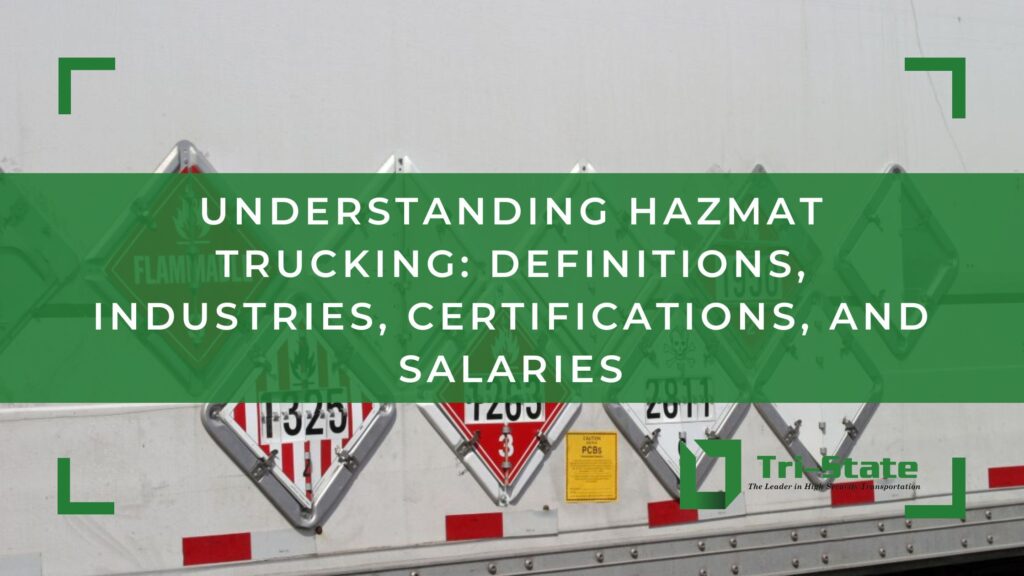
Operating a commercial motor vehicle carrying hazardous materials represents one of the most respected, high-paying, and security-critical careers in the transportation industry. Unlike general dry van or reefer freight, specialized hazmat transport demands advanced regulatory knowledge, active federal clearances, and an uncompromising commitment to highway safety.
Whether you are an experienced CDL-A driver looking to upgrade your earning potential, an operator navigating endorsement renewal cycles, or a professional refining your on-the-road safety protocols, this master resource guide connects you directly with the technical knowledge, regulatory updates, and career roadmaps needed to succeed in high-consequence logistics.
1. What Is Hazmat Trucking? (Definitions, Cargo, & Comparisons)
Under Title 49 of the Code of Federal Regulations (49 CFR), hazardous materials encompass goods capable of posing an unreasonable risk to health, safety, or property during highway transit.
The 9 Federal Hazard Classes
The U.S. Department of Transportation (DOT) and Federal Motor Carrier Safety Administration (FMCSA) categorize hazardous materials into nine primary classes:
- Class 1 (Explosives): Fireworks, ammunition, detonators, and military ordnance.
- Class 2 (Gases): Propane, compressed oxygen, helium, and anhydrous ammonia.
- Class 3 (Flammable Liquids): Gasoline, diesel fuel, ethanol, and solvent paints.
- Class 4 (Flammable Solids): Matches, magnesium, sulfur, and activated carbon.
- Class 5 (Oxidizers & Organic Peroxides): Hydrogen peroxide, ammonium nitrate, and pool chemicals.
- Class 6 (Toxic & Infectious Substances): Pesticides, medical waste, cyanide, and biological hazards.
- Class 7 (Radioactive Materials): Uranium, medical isotopes, and density gauges.
- Class 8 (Corrosives): Battery acid, sulfuric acid, sodium hydroxide, and hydrochloric acid.
- Class 9 (Miscellaneous Dangerous Goods): Lithium-ion batteries, dry ice, asbestos, and hazardous waste.
Primary Industries Requiring Hazmat Logistics
Hazardous materials transport spans virtually every major economic sector, including Chemical Manufacturing (solvents and acids), Petroleum & Energy (fuels and crude oil), Pharmaceuticals & Healthcare (isotopes and lab chemicals), Waste Management (industrial and hazardous waste disposal), Aerospace & Defense (rocket propellants and explosives), Agriculture (fertilizers and pesticides), and Mining & Construction (blasting agents).
Deep-Dive Guides & Comparisons
- What Is a Hazmat Driver? — A driver-focused look at daily responsibilities, required endorsements, and career expectations.
- Hazmat vs. Standard OTR Trucking: 5 Key Differences — A side-by-side evaluation of pay rates, physical labor, regulatory exposure, and lifestyle factors.
- What Is Specialized Freight? — How high-consequence transport differs from commodity freight hauling.
- What Is High-Value Cargo? — Managing high-security loads, satellite tracking protocols, and strict chain-of-custody requirements.
- Tri-State Hazmat’s Role in Expedited Trucking — How time-sensitive hazardous freight moves securely across North American corridors.
- Exploring the Categories of Hazardous Waste — A deep dive into toxic, corrosive, ignitable, and reactive waste transportation.
- Overview of Transporting Dangerous Materials — Navigating hazard classes 1 through 9 under federal Title 49 regulations.
- The Main Methods of Hazardous Material Transportation — Comparing highway transport against rail, air, and marine dangerous goods logistics.
- Different Types of Trucking Careers — How hazmat logistics fits into broader commercial driver career paths.
2. Why Become a Hazmat Truck Driver? (Pay, Benefits, & Earning Potential)
Specialized freight offers some of the highest earning potential, strongest job security, and most reliable pay structures in commercial transportation. According to the U.S. Bureau of Labor Statistics (BLS), demand for specialized heavy and tractor-trailer drivers continues to outpace standard freight sectors due to the specialized nature of the role.
Because handling placarded cargo requires specialized qualifications and heightened responsibility, top motor carriers offer industry-leading per-mile rates, guaranteed weekly pay, paid vacation, and employer-sponsored benefits.
Earning Potential & Financial Upside
- Is Hazmat Trucking Worth It? Pay, Risk, Home Time, and Career Growth — A comprehensive evaluation of financial rewards versus regulatory accountability.
- Financial Rewards of Being a Hazmat Truck Driver — Analyzing per-mile pay, detention rates, accessorial pay, and safety performance bonuses.
- What Are the Highest-Paying Truck Driving Jobs? — Comparing specialized hazmat, tanker, team, and heavy haul compensation.
- How to Know If You Are Earning Enough as a Trucker — Benchmarking your current CDL paycheck against specialized carrier standards.
Making the Career Switch
- Dry Van to Hazmat: How Experienced CDL-A Drivers Earn More — A practical transition roadmap for general freight drivers looking to upgrade their skills.
- Career Outlook for Truckers — Long-term demand trends and career stability for specialized haulers.
- Taking a Closer Look at Trucking Industry Job Growth — Market resilience and driver retention across high-security logistics.
- The Benefits of Partnering with a Local Hazmat Carrier — The advantages of dedicated dispatch, quality fleet equipment, and carrier backing.
3. How to Get Certified & Endorsed (Licensing, Endorsements, & Compliance)
Operating legally requires managing two separate compliance clocks: the state Commercial Driver’s License (CDL) Hazmat Endorsement (HME) and mandatory 3-year Department of Transportation (DOT) employee training. Staying informed prevents costly out-of-service orders and gaps in driving privileges.
Endorsements & Security Credentials
- Hazardous Materials Endorsement (HME): Requires passing a state DMV written knowledge test and a Transportation Security Administration (TSA) Security Threat Assessment background check with fingerprinting.
- Transportation Worker Identification Credential (TWIC): A TSA-issued credential permitting unsupervised access to secure maritime ports, chemical terminals, and military facilities.
- Truck Driver’s Guide to Hazmat Endorsements — Step-by-step application procedures, TSA background checks, fingerprinting, and testing tips.
- How Long Is Hazmat Certification Good For? — Understanding the 3-year DOT employee training rule versus the 5-year CDL endorsement cycle.
- What Is a Tanker Endorsement? — Requirements for earning the ‘N’ or combination ‘X’ endorsement for bulk liquid hauling.
- How to Register for a TWIC Card and Find High-Paying Opportunities — Obtaining TSA clearance for port, maritime, and secure facility access.
Training Mandates & Regulations
- Comprehensive Overview of the ELDT Mandate — Navigating federal Entry-Level Driver Training rules for endorsement applicants.
- Hazmat Driver Training Requirements — Core training modules under 49 CFR § 172.704 (General Awareness, Function-Specific, Safety, Security).
- Importance of Hazmat Training for Truck Drivers — Why continuous compliance training protects driver safety and professional standing.
- Do Freight Brokers Need Hazmat Certification to Be Compliant? — Examining legal offeror duties and paperwork responsibilities across logistics intermediaries.
4. Landing the Best Hazmat Trucking Jobs & Choosing Your Path
Finding the right motor carrier requires asking strategic questions during recruitment and selecting an operational structure—such as solo, team, or specialized tanker driving—that aligns with your financial and lifestyle goals.
Hiring Preparation & Recruiter Insights
- What Should CDL-A Drivers Ask a Hazmat Recruiter Before They Apply? — Key questions regarding guaranteed pay, safety equipment, detention policies, and hometime.
- Can You Get a Hazmat Trucking Job Without Hazmat Experience? — How general CDL-A over-the-road experience may or may not satisfy hiring criteria.
- What to Look for in a Trucking Company: A Driver’s Guide — Evaluating fleet safety scores, equipment age, dispatcher support, and pay transparency.
- How to Progress Your Trucking Career — Strategic steps to advance into high-security government and defense freight lanes.
Fleet Structures: Solo, Team, & Tanker
- Team Driver or Tanker Driver: Which Hazmat Job Fits Your Career Goals? — Comparing pay scales, physical requirements, and scheduling between team and bulk liquid transport.
- Team vs. Solo Driving: Which Is Best for You? — Weighing miles, earning potential, and OTR lifestyle trade-offs.
- Pros of Team Truck Driving — Maximizing weekly revenue and truck utilization with a dedicated driving partner.
- Hazmat Truck Team Drivers Earn Guaranteed Weekly Pay — Understanding guaranteed pay structures for high-security team operations.
- Why Experienced CDL-A Drivers Choose Tanker Hazmat Trucking — The benefits and earning upside of specialized bulk liquid transport.
- Is Hazmat Tanker Driving Hard? What CDL-A Drivers Should Know — Managing liquid surge, loading procedures, and physical demands.
Specialized Opportunities & Veteran Transition
- Hazmat Team Driver Jobs at Tri-State — High-security team routes for experienced CDL-A pairs.
- Hazmat Tanker Driver Jobs at Tri-State — Dedicated bulk routes featuring guaranteed weekly pay and safety support.
- Unlocking Profit Potential: Owner-Operator Hazmat Trucking Jobs — Maximizing revenue for independent business owners in specialized freight.
- How Military Experience Translates to a Career in Trucking — Applying military transportation background to commercial driving.
- Why Trucking Is a Great Career Choice for Military Veterans — Utilizing security clearances, discipline, and structure in defense freight logistics.
- Why Trucking Is the Perfect Career for Gen-Z — Entering a high-demand, tech-forward trade without collegiate debt.
- Looking for a Career Change? Consider Trucking — Essential insights for professionals making a mid-career transition into trucking.
5. On-the-Road Operations, Tech, & Team Lifestyle
Long-haul hazmat transportation requires discipline, fatigue management, and seamless coordination. Drivers handling high-consequence freight must balance tight delivery schedules with strict safety, security, and sleeper berth routines.
Fatigue Management & Team Dynamics
- How Hazmat Team Drivers Manage Sleep, Fatigue, and Hours of Service — Managing sleeper berth shifts, route handoffs, and HOS compliance.
- What Makes a Great Hazmat Team Driving Partner? — Core traits, communication strategies, and shared habits for successful team driving.
Route Optimization & Technology
- How AI and Automation Are Transforming the Trucking Industry — Utilizing collision avoidance, smart telematics, and automated dispatch safety tools.
- Best Practices for Optimizing Your Trucking Routes — Planning designated hazmat routing, avoiding restricted tunnels, and managing safe parking stops.
- Best Apps for Truckers — Top navigation, weather tracking, parking, and documentation tools for CDL drivers.
Life on the Road & Cab Comfort
- Tips for Making Your Truck Feel More Like Home — Sleeper cab organization, appliances, and personal comfort hacks for long hauls.
- Tips for Life on the Road for the Lifestyle Trucker — Staying healthy, eating well, exercising, and maintaining family connections while OTR.
- Must-Have Trucking Accessories — Practical tools and gear for pre-trip inspections, cab maintenance, and daily comfort.
- Gift Guide for Truckers — Practical gear, electronics, and tools designed for professional haulers.
- Trucking Terms Every Driver and Shipper Should Know — Master road jargon, radio terminology, and logistics vocabulary.
6. Hazmat Safety, Weather Driving, & Regulatory Compliance
Safety is the absolute priority in hazardous materials logistics. From rigorous pre-trip trailer inspections to navigating icy mountain passes, maintaining total command over your vehicle protects your CDL, your career, and public safety.
Regulations, Inspections, & Defensive Driving
- Top Hazmat Shipping Regulations Every Truck Driver Should Know — Essential rules for verifying shipping papers, placarding, and load segregation.
- Trucking Law Updates: What Hazmat Truckers Need to Know — Keeping up with evolving federal regulatory changes and DOT enforcement standards.
- How Hazmat Drivers Balance Safety, Security, and On-Time Delivery — Maintaining route security without compromising delivery schedules.
- 10 Best Truck Driving Safety Tips for Commercial Drivers — Core safety protocols every professional driver should execute daily.
- Defensive Driving Tips for Truck Drivers — Space cushion management, speed adjustment, and hazard anticipation techniques.
- How CDL-A Drivers Can Eliminate Distracted Driving — Eliminating cab distractions to safeguard your driving record and safety score.
- Tips for Avoiding Common Semi-Truck Accidents — Preventing backing collisions, lane-change clipping, and rollover hazards.
Emergency Preparedness & Equipment Maintenance
- Essential Items for a Truck Driver Emergency Kit — Must-have safety equipment, PPE, and emergency spill response supplies.
- Essential Tools Every Truck Driver Needs — Core hand tools and maintenance gear for roadside fixes and thorough pre-trips.
- How to Pre-Test a DTTS Semi-Trailer — Operating procedures for inspecting and pre-testing specialized defense trailers.
Severe Weather & Mountain Driving
- Winter Safety Tips for Truck Drivers — Preparing your tractor, air lines, and fuel systems for sub-zero conditions.
- 7 Winter Weather Driving Tips for Truckers — Tactical driving techniques for handling snow, slush, and black ice.
- How to Prepare Your Truck for Winter — Cold-weather maintenance, fuel treatment, and air system anti-freeze protocols.
- Essential Tips for Driving During a Snowstorm — Knowing when to adjust speed, evaluate visibility, or park safely.
- How to Drive a Semi-Truck in the Mountains — Engine braking techniques, gear selection, and managing steep downhill grades.
- Navigating Mountain Road Truck Driving: Expert Tips — Handling sharp curves, runaway truck ramps, and mountain weather shifts.
- Benefits of Tire Chains for Downhill Braking — Maximizing tire traction on icy mountain passes.
- How Many Tire Chains Do You Need for a Semi-Truck? — Understanding state chain laws, axle configurations, and installation routines.
- Tips for Driving a Semi-Truck in Heavy Rain — Avoiding hydroplaning, managing spray visibility, and maintaining traction.
- Summer Driving Safety Tips for Truck Drivers — Preventing tire blowouts, engine overheating, and brake fade in extreme heat.
- Tips for Driving a Truck at Night — Managing night vision, fatigue, and reduced road visibility.
- The Future of Hazmat Trucking: Trends and Predictions — Exploring emerging industry trends, regulatory changes, and logistics technology.
Drive with Industry Leaders: Join Tri-State Hazmat
At Tri-State Hazmat, drivers are our #1 asset. We specialize in high-consequence, high-security freight, including Department of Defense cargo, Class 1 explosives, and radioactive waste.
Top drivers at Tri-State earn up to $130,000 per year, supported by guaranteed weekly pay, paid employer health insurance, paid vacation, retention bonuses, and continuous access to late-model equipment.